
There is usually a moment when organizing your photos sounds completely manageable.
You’ll set aside a weekend. Start with a box. Make a few folders on the computer. Finally bring everything together.
And for many people, that is a perfectly good place to begin.
But family photo collections have a way of growing quietly over time.
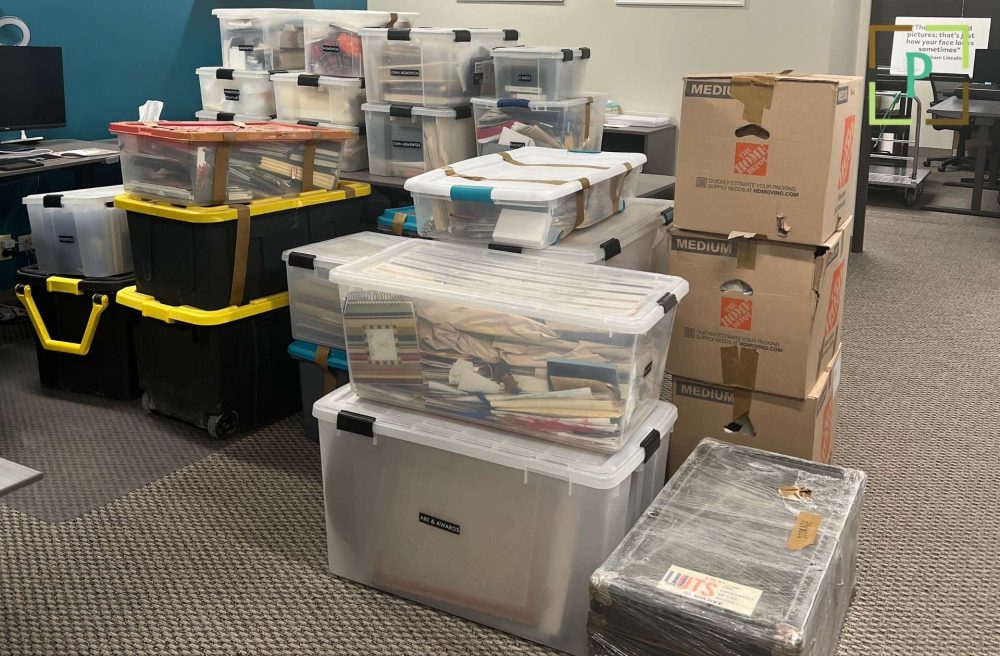
The photographs you took when your children were young become decades of family memories. Digital photos accumulate alongside the prints and albums you already have. Then a parent downsizes, or you inherit another collection, and suddenly you are responsible for photographs that began long before you started taking your own.
At some point, you may look at everything in front of you and realize:
“This isn’t the project I thought it was.”
That doesn’t necessarily mean you have too many photos. It may mean your collection has become more complicated.
And understanding that difference can help you decide whether organizing it yourself still makes sense or whether it may be time to ask for help.
A Large Photo Collection Isn’t Necessarily a Complicated One
It is easy to assume that the number of photographs determines how difficult a photo-organizing project will be.
But that is only part of the story.
Someone with thousands of digital photographs stored in a relatively consistent way may have a large collection but a fairly straightforward project.
Another family may have fewer photographs, but they are spread across boxes, albums, old computers, and inherited collections. Some may be labeled. Others may not. There may be photographs of people only one or two family members can still identify.
That project requires something different.
The challenge isn’t simply the number of photographs. It is the number of decisions connected to them.
What belongs together? What information needs to stay with a photograph? What should be digitized? Where are the best copies? Which family member might know the story behind something you found?
And ultimately, what do you want this collection to become?
Those questions are often what turn photo organizing from a sorting project into a larger family-history project.
Can You Organize Your Photos Yourself?
Absolutely.
Professional photo organization isn’t necessary for every collection.
If your photographs are relatively contained, you have a clear idea of what you want to accomplish, and you enjoy the process, organizing them yourself can be incredibly rewarding.
Start with something manageable.
Bring photographs from one place together. Create a simple system you understand. Identify people while you still have someone to ask. Back up important digital photographs. Make progress without feeling as though you need to solve the entire collection at once.
You may discover that you enjoy revisiting the memories along the way.
And if your system works for you and your family, that matters far more than creating something perfect.
But sometimes the project changes.
When Your Photo Collection Becomes More Than a DIY Project
Maybe you were making progress with your own photographs.
Then your parents moved, and a few albums came home with you…then several boxes.
There are photographs from your childhood mixed with photographs from your parents’ childhoods. You recognize your grandparents, but not everyone standing beside them. Some images have names and dates written on the back. Others leave you wishing someone had.
Suddenly, you aren’t simply organizing your photos anymore.
You have become responsible for a collection, which can feel very different.
You may be bringing together several generations of family history while trying to determine what should happen to it next.
There may also be practical questions you never expected to answer.
How should older photographs be handled? Should albums stay intact? What do you do with duplicates? How do the physical photographs eventually connect with the digital collection? What should be preserved before the people who know the stories are no longer available to tell them?
There isn’t always one correct answer. And that is where experience and judgment begin to matter.
What Does a Professional Photo Organizer Actually Do?
A professional photo organizer helps individuals and families bring their photographs together, establish an organizational system, and create a collection that can be found, understood, and enjoyed.
That work may include sorting physical photographs, consolidating digital files, identifying duplicates, coordinating digitization, and creating a consistent structure for the collection.
But for a significant collection, much of the value comes before a photograph ever reaches a scanner or a folder.
It begins with understanding what is there.
At Picture This Organized, we take time at the beginning of a project to look at the collection as a whole and understand what the family ultimately wants from it.
- Maybe the goal is to bring photographs from several generations together.
- Maybe it is to make a collection easier for children and grandchildren to access.
- Maybe the family wants albums, a digital archive, or simply the reassurance that important photographs are organized and protected.
Those goals matter because they influence the decisions that come next.
A good system should serve the family who owns the photographs, not force the family into a predetermined system.
Professional Photo Organizing, Scanning Services or DIY: What’s the Difference?
| What to Consider | Picture This Organized (PTO) | Scanning Service | DIY Photo Organizing |
| Best for | Large, complex, or multigenerational collections | Photos that primarily need digitization | Smaller collections with straightforward needs |
| Primary focus | Organizing, preserving, and connecting the collection | Converting physical photos into digital files | Often addresses individual sources rather than the entire collection |
| Physical & digital photos | Brings different formats into one cohesive system | Primarily digitizes physical media | Combining formats requires planning and technical knowledge |
| Duplicate photos | Identifies and manages duplicates | Usually not included | Requires time, careful review, and software knowledge |
| Family history & context | Preserves meaningful details and connections | Typically outside standard services | Depends on recognizing and documenting meaningful connections |
| Personalized organization | Creates a system based on your family’s needs | Generally limited to file naming and delivery | May overlook needs beyond basic organization |
| Your involvement | Professional guidance with family input when needed | Primarily submitting and receiving materials | You make all decisions and manage the process |
| Time commitment | PTO manages the organizing work | You prepare photos and organize the results | Can require substantial time and ongoing effort |
| Preservation | Considers careful handling and long-term accessibility | Depends on the scanning provider | Depends on understanding appropriate preservation and backup practices |
| End result | A cohesive collection your family can find, understand, and enjoy | Digital copies of submitted materials | Results depend on your approach and follow-through |
There isn’t one right solution for every family.
If your photographs are already organized and simply need to be digitized, a scanning service may be the right choice. If you enjoy the process and have a small manageable collection, organizing your photos yourself can be rewarding.
But when decades of photographs, inherited collections, and different types of media need to come together, the challenge often extends beyond scanning or sorting.
That’s where Picture This Organized brings something different: the experience, judgment, and thoughtful process needed to turn a complicated collection into one that makes sense for your family.
A scanning service and a professional photo organizer can both play important roles in preserving family photographs.
But they don’t necessarily solve the same problem.
A scanning service primarily converts physical photographs into digital files. If your photographs are already sorted and your goal is simply to create digital copies, that may be exactly what you need.
But what happens when the photographs haven’t been organized?
Imagine sending several boxes of prints to be scanned. When the project is finished, you receive digital copies of everything.
You now have digital photographs, but you may still have the same questions you started with.
Who are the people in these images? Which photographs belong together? Are some already saved on your computer? How should the digital files be named and arranged so someone else in your family can find them?
Digitizing photographs and organizing a photo collection are two different objectives.
Professional photo organizations consider the larger picture.
It can involve bringing photographs from multiple sources together, evaluating duplicates, developing a meaningful organizational structure, and determining how important information should remain connected to the images.
It also considers how the collection will be used after the work is complete.
Will you want to create albums? Share photographs with family members? Preserve your parents’ collection alongside your own? Find a particular photograph without searching through dozens of folders?
Those answers help shape the organizational system.
At Picture This Organized, we believe the purpose of organizing a collection is not simply to create more digital files.
It is to make the photographs and the stories connected to them easier to find, understand, and enjoy.
Sometimes Experience Means Knowing When to Stop
There is another part of professional photo organizing that can be difficult to see from the outside.
Knowing when not to make a decision.
Imagine finding an old photograph with several unfamiliar people in it. It would be easy to place it into a general folder and keep moving.
But perhaps there is handwriting on the back. Maybe another photograph in a different box provides the date. Or perhaps someone in the family will immediately recognize the people if given the chance to see it.
Moving quickly through a collection may help the project progress, but it can also mean overlooking important details. Taking the time to look more closely may uncover information that helps preserve the story behind a photograph.
The same can be true of an old album whose arrangement tells part of a story, a group of photographs that appear unrelated until more of the collection is uncovered, or a piece of memorabilia that provides context for the photographs around it.
Sometimes experience means knowing what to do next and knowing when you don’t have enough information yet.
That is one reason thoughtful photo organization takes time. The goal isn’t simply to get through the collection.
It is to handle it well.
When Is It Time to Hire a Professional Photo Organizer?
There isn’t a magic number of photographs that determines when you need professional help.
For many people, the answer has more to do with the role the collection has started to play in their lives.
- If you have begun the project several times and never seem to make meaningful progress.
- If you have inherited photographs and feel a responsibility to preserve them, but you aren’t sure where your parents’ collection ends and yours begins.
- If you know you could learn how to do everything yourself, but you also know that you don’t want to spend the next several years of your free time doing it.
- If every time you open a box, you find yourself with more questions than answers.
That doesn’t mean you failed at organizing your photographs. It may simply mean the project has reached a point where another perspective would help.
Professional help can provide a plan, a process, and someone who knows how to work through the decisions with you.
You still know your family better than anyone else. The professional brings experience with the collection.
The best projects make room for both.
What Should You Look for in a Professional Photo Organizer?
When you’re trusting someone with decades of family photographs, experience matters.
But so does the way that experience is applied.
A professional photo organizer should understand how to work with different types of photographic materials, develop practical organizational systems, and recognize when a collection requires special preservation considerations.
A collection that includes aging prints, home movies, and family memorabilia may require different decisions from one made up primarily of digital photographs.
That is why it is worth asking about a professional’s experience with collections similar to yours.
Have they worked with inherited family collections? Can they explain their approach to organizing physical and digital materials? Do they understand the importance of preserving names, dates, and other information connected to photographs?
Pay attention to the questions they ask you.
A professional who immediately recommends a solution without understanding your collection may be overlooking important considerations.
At Picture This Organized, understanding what a family has and what they hope to accomplish is part of determining the right path forward.
Sometimes that means asking questions before recommending a particular service, recognizing that a photograph, album, or piece of memorabilia needs additional context before a decision is made, and sometimes it means helping a family see possibilities for their collection that they hadn’t considered.
Technical knowledge is important.
But so are judgment, communication, and a process that respects the collection and the people who created it.
How Will My Family Photos, Videos, and Memorabilia Be Protected?
This is one of the most important questions to ask before hiring someone to work with your collection.
Photographs, original home movies, and family memorabilia may be irreplaceable. Some items may be fragile because of their age or the materials used to create them.
Digital collections can also contain personal information and family memories that deserve careful handling.
So, before entrusting your collection to a professional, ask how your materials will be managed throughout the project.
- For physical photographs and memorabilia, that may include questions about handling, temporary storage, transportation, and whether original items will leave your home.
- For digital photographs and videos, ask how files are transferred, stored, backed up, and protected from accidental loss or unauthorized access.
You may also want to know who will have access to your collection and what happens to temporary or working files after the project is complete.
A professional should be able to explain their procedures clearly and discuss any special considerations related to your collection.
These questions aren’t simply technical details. They are part of deciding whether you feel comfortable placing something personally significant in someone else’s care.
At Picture This Organized, we understand that protecting a collection is just as important as organizing it. We begin by understanding the materials involved and the family’s priorities so that decisions about handling, organizing, and preserving the collection reflect its individual needs.
Our approach emphasizes thoughtful handling, careful decision-making, and respect for the personal nature of every collection. We recognize that these aren’t simply photographs or files. They’re often the only surviving records of people, places, and moments that matter deeply to a family.
When evaluating a photo organizing company, don’t be afraid to ask how it approaches the responsibility of working with irreplaceable materials.
The right professional should give you confidence not only in how your collection will be organized, but also in how it will be cared for along the way.
To learn more about our approach to protecting client collections, visit Picture This Organized’s Privacy & Security page.
How Involved Do I Need to Be in the Photo Organizing Process?
That depends on your collection, your goals, and how much responsibility you want to retain.
Some families enjoy participating in the process. They want to help identify photographs, share stories, and make decisions about how the collection should be organized. Others have been thinking about the project for years and are ready for someone else to take the lead.
They don’t necessarily want to learn photo-organizing software, sort through every duplicate, or manage the details of building an organizational system. They want the project handled thoughtfully.
Both approaches are reasonable.
A professional photo organizer can help establish the process and take responsibility for the organizational work while identifying the decisions that still benefit from family input.
For example, a professional may be able to determine how digital files should be structured, but only a family member may know whether an unfamiliar photograph belongs with the grandparents’ collection or a particular family event.
That doesn’t mean the family needs to manage every step. It means their knowledge can be incorporated where it matters.
At Picture This Organized, the starting point is understanding what you want from your collection.
That creates an opportunity to discuss how the work will be approached, what decisions may need your input, and how the finished collection should function for you and your family.
You shouldn’t have to become an expert in photo organization to benefit from hiring one.
Can Picture This Organized Help If I Don’t Live in Denver?
Picture This Organized is based in the Denver-Metro, Colorado area. But families don’t always live in the same place as the photographs they’ve inherited.
You may live in another state while helping a parent downsize in Colorado. Perhaps your family’s albums are in one household while the digital photographs are stored elsewhere. Or maybe you’ve become responsible for a collection that spans several generations and multiple locations.
These situations can create questions about how a professional photo-organizing project might work.
The answer depends on the materials involved and the type of assistance needed.
Physical photographs, fragile albums, and older media may require hands-on handling. Digital collections may offer different possibilities for collaboration.
If you live outside the Denver-Metro area, you can contact Picture This Organized to discuss your collection, where the materials are located, and what you’re hoping to accomplish.
That initial conversation can help determine whether the project is a good fit for PTO’s services and what arrangements may be appropriate.
When choosing a photo organizer, geographic convenience is worth considering, but it isn’t the only factor.
For a significant collection, the professional’s experience, approach, and ability to understand your goals may be just as important.
Your Collection Took a Lifetime to Create
There is no reason you have to solve it in a weekend.
Your photographs may represent your childhood, your parents’ lives, your children growing up, and people whose stories have now become part of your care.
Organizing them can make those memories easier to find, share, and enjoy. It can also make it easier for the next person who eventually becomes responsible for them.
If your collection is manageable and you want to organize it yourself, start. You do not need the perfect system to make meaningful progress.
But if the collection has become larger, more complicated, or simply more time-consuming than you want to manage alone, you do not have to figure out every step before asking for help.
Picture This Organized helps families understand what they have, determine what matters most, and create a thoughtful path forward for the collections they have spent a lifetime creating.
Because the goal isn’t simply to finish organizing your photos.
It’s to create a collection your family can continue to find, understand, and enjoy.
Learn more about professional photo organization with Picture This Organized.
23 thoughts on “Is Your Family Photo Collection Too Big to Organize Yourself? When Professional Help Makes Sense”
Hello, what is your hourly rate for organizing digital files?
Hi Polly:
Thanks for asking. Let’s schedule a phone call to chat.
I have photos that are not digitized and I do not want them to be. How do I began?
Hi Kathy,
Sounds like you are looking for some help getting your photos digitized? Go our Contact Us page and schedule a free consult. We can get acquainted and talk about ways we can help.
Hi Julie, can I schedule a call with you to go over what I need?
Hi Reza,
You can schedule a consultation! Just go to the Contact Us page and schedule a time that works for you!
Hope we can connect soon!
interested in knowing your rate please
Hi Shayna,
Our rates depend upon the work we do and the project scope. We provide an estimate or a proposal that list the project in phases. Please schedule a consult so we can get acquainted and discuss how we work. Just go to the Contact Us page. https://picturethisorganized.com/contact-us/
Hoping you can lead me to a company that can look at two pictures and tell me if they’re the same person..
Hi Karen,
Let’s schedule a consultation to chat about how we can help with that. Here’s a link to use:
https://picturethisorganized.com/contact-us/
Hope to chat with you soon!
Can you work with international clients?
Hi Sharlene,
Yes we can usually make that work! Where are you located?
Hello. i have boy/girl twins.. they are soon turning 18.. i have thousands of photos of theirs on my laptop. i want someone to go through them, select the best, and help me make a picture book that i can give to them and my relatives on their 18th birthday.. i want that book to be physical; but would also like it to live online as well..
Hi Paul:
Let’s set up a phone consult to talk about the specifics of how we can help you. Please go to the Contact page. There you can select a time for the consult and complete the form. Looking forward to connecting soon!
Where about are you
Hi Theresa:
We are in Colorado – just south of Denver!
Feel free to set up a free consultation by going to the Contact Us page!
Hi Theresa! We are in the United States in Colorado near the Denver metro area.
whats a hourly rate,
Hi James:
If you are interested in talking about hiring us to help you with your photos, please go to the Contact Us page. There you can fill in the form and sign up for a time that works for you!
I’ve got 20 thousands pics and want to organize them
Hi Jacob!
Please go to the Contact Us page and schedule a consultation. I would love to chat with you about how we can help you get those photos organized!
https://picturethisorganized.com/contact-us/
Hope we can chat soon!
Hello there,
I’m having a terrible time organising my family photos for the last 7 years and have a messy Google Photo Drive where I have too many photos. I basically need someone to delete all the duplicates (I took so many when I got my first iPhone!) and organise them nicely. I would also like someone (ideally a mummy or daddy who can instantly see what would be a special moment) into yearly photo books (perhaps 2 a year) for me to print.
Is this a service that you offer?
Many thanks
Sarah
Hi Sarah!
Thanks for reaching out! We can help you with all of the things you’ve mentioned! Let’s schedule a photo consultation! Please go to the Contact Us page on the site. There you can look at the options and find a time that works for you.